
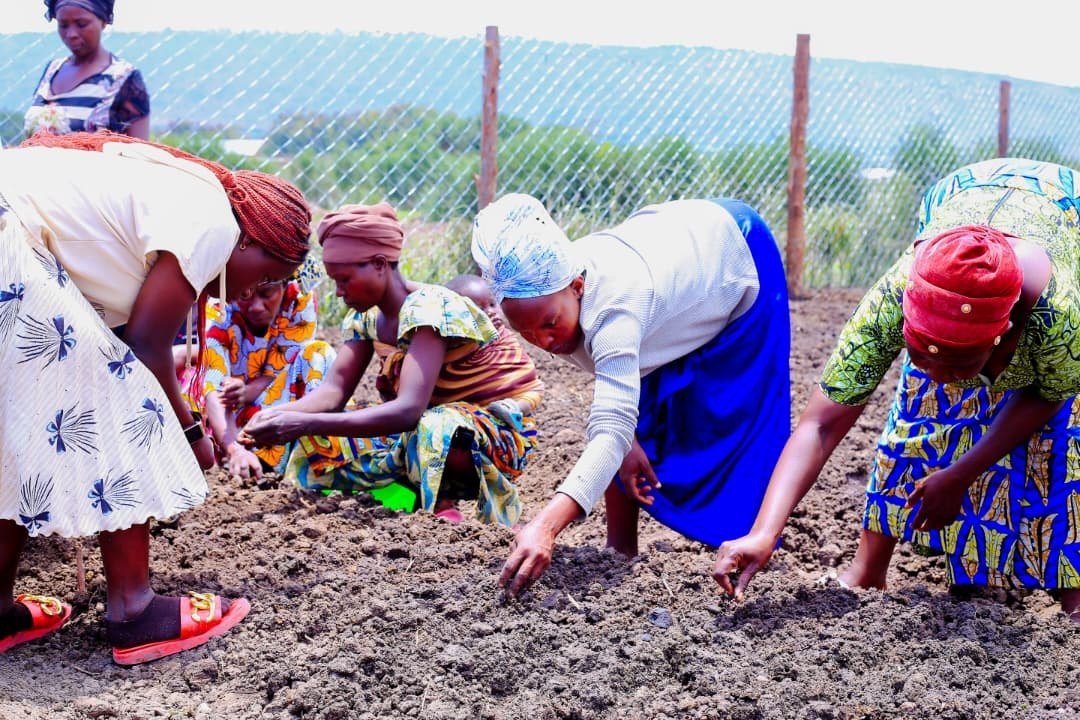
The agri-demonstration site in Rubondo Zone, Nakivale Refugee Settlement, was established in June 2025 to support food production, skills training, and income generation among refugee households. Over a seven-month period, the site has developed into a thriving space for nursery management, vegetable cultivation, and community-based training, despite consistent environmental and resource constraints.
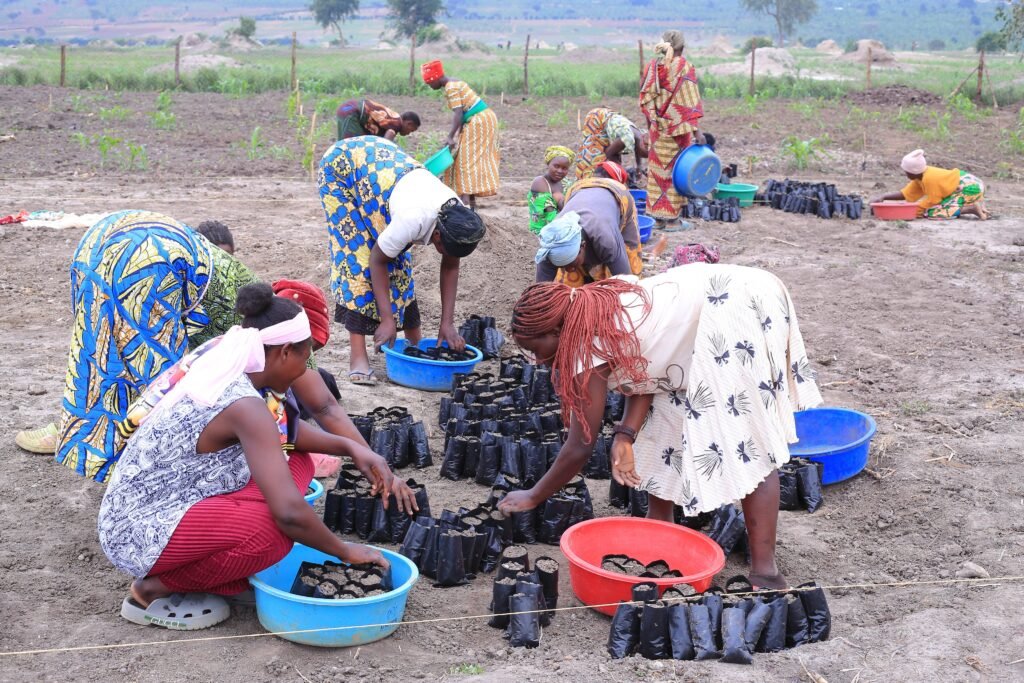
Initial work focused on building nursery capacity. A total of 26671 polythene bags were potted with soil to support continuous seedling production. This initiative allowed for staggered planting cycles rather than single-phase cultivation. It reduced the risk of complete loss during adverse weather conditions.
23980 seeds were planted, including jackfruit, lemon, mango, avocado, papaya, calliandra, and orange. The selection considered a wide range of short-term and long-term priorities. Fruit trees such as mango, avocado, and jackfruit provide both nutritional value and potential income, while species like calliandra contribute to soil fertility and livestock feeding systems. Seventy seedlings of mango, avocado, lemon, bananas, and orange were planted directly into the ground.
These plots function as demonstration units, which show planting techniques, spacing, and integration methods that can be replicated by the refugees at the household level.
Vegetable production was done through twenty-two nursery beds, planted with spinach, collard vegetables, sukuma wiki, cabbage, and eggplant. These beds serve both as production units and training spaces.
Women involved in the project are learning propagation and crop management through direct participation. They have the expectation that these practices will extend beyond the site.
Infrastructure under Environmental Pressure
Site infrastructure has played a critical role in determining outcomes. Drainage channels were constructed along the perimeter to reduce water accumulation, and fencing was done with community help.
Despite these measures, flooding remains a persistent issue. Water continued to enter the garden, leading to soil erosion and waterlogging. It damaged seedlings and interrupted planting schedules.
Dry conditions also present a parallel challenge. With only two rainy seasons annually and limited irrigation systems, seedlings risk drying out, delaying growth, and reducing yields. The site operates within these opposing pressures. Both excess rainfall and prolonged dry periods affect productivity. Managing water remains a major concern.
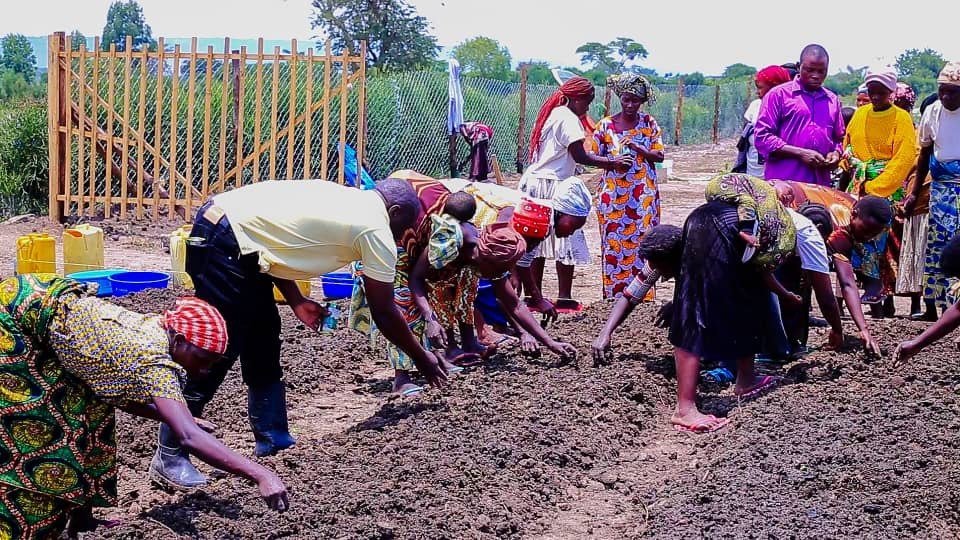
Training activities have been integrated into daily operations. Thirty women were trained in nursery bed preparation. The training focused on practical skills delivered during active cultivation. Timing influenced outcomes. Early involvement in the process improved skill retention and participation. However, language barriers stalled training delivery and limited the effectiveness of sessions for some participants.
Agricultural activity at the site is part of a broader livelihood structure. Participants are not dependent on farming alone. 120 women reported engaging in small businesses, tailoring, and livestock rearing alongside agricultural activities. This diversification reflects unstable income conditions. Agriculture contributes to food access and limited income, but households continue to rely on multiple sources to manage daily needs.
A total of 16708 seedlings were distributed to 232 individual women, divided into nine groups. These included both agroforestry species and vegetable seedlings. The combination supports immediate food production and builds longer-term agricultural capacity.
Livelihood strategies outside the site are closely linked to protection risks. Women reported reliance on casual labour in immediate communities, often underpaid and exploited. In the process of seeking income, exposure to violence became common. Testimonies of rape leading to unwanted pregnancies and STDs reveal their vulnerability.
Household-level pressures contribute to these risks. Child labour and early marriages were identified as perennial concerns. Agricultural support reduces some immediate pressure, particularly through food production, but does not eliminate these broader conditions.
Labour and Financial Gaps in Group Dynamics
In one instance, thirteen workers were engaged in land preparation and planting. However, delayed wages caused tension and reduced motivation among the 13 workers. Some workers threatened to abandon tasks which affected timelines during critical planting periods. Labour reliability is directly linked to output, particularly in time-sensitive agricultural cycles.
Infrastructure gaps remain unresolved. The absence of a latrine and storage facilities has affected daily operations. Hygiene standards were surely compromised and tools and materials were left exposed, increasing the risk of damage or loss.
Financial constraints are present across all stages of implementation. Financial provisions were not sufficient compared to the average daily operational requirements. This has caused pressure on site management and limited the ability to address internal issues in a timely manner.
Additionally, unequal goat distribution had instilled dissatisfaction among women’s groups. Some refugees did not receive livestock, and that reduced trust within groups. When inequality in resource allocation is perceived, it can slow participation and long-term collaboration down.
In terms of external engagement, visits from RUFORUM and international volunteers resulted in recommendations related to drainage, site organization, and potential greenhouse construction. These inputs are aimed at improving productivity and stabilizing output, but implementation depends on available funding and resources, and are not always under our grasp.
It’s also important to mention that monitoring practices within the community have improved how quickly one can respond to challenges. Issues such as pest infestations and treatment gaps were identified in the early stages of monitoring. Intervention before losses increased. Improvements in site organization, including bed measurement and waste management, have also contributed to more consistent operations.
Livelihood Outcomes under Constrained Systems
The site’s output includes both tangible and non-tangible results. Tangible outputs include seedling production, vegetable cultivation, and distribution. Non-tangible outputs include skill development, group coordination, and exposure to agricultural practices that can be applied at the household level.
At the same time, production remains contingent on factors that are not fully human-controlled. Flooding continues to damage crops despite existing drainage systems. Dry conditions interrupt growth cycles in the absence of irrigation. Infrastructure limitations affect storage and hygiene.
Given the conditions at the site, agricultural activity in Rubondo Zone works within a system where production, training, and risk are interconnected. Progress is measurable in terms of nursery capacity, seedling distribution, and participation. Limitations are equally measurable in terms of environmental impact, resource gaps, and operational instability.
But also beyond that, there are parameters that remain at the sky’s reach.