Access to safe drinking water is one of the most important needs for refugee families. In Nakivale Refugee Settlement, many households depend on shared water sources such as boreholes, taps, and water collection points.
While these sources are important, water can still become contaminated during collection, transportation, and storage, putting families at risk of waterborne diseases.
Supporting vulnerable households with safer drinking water
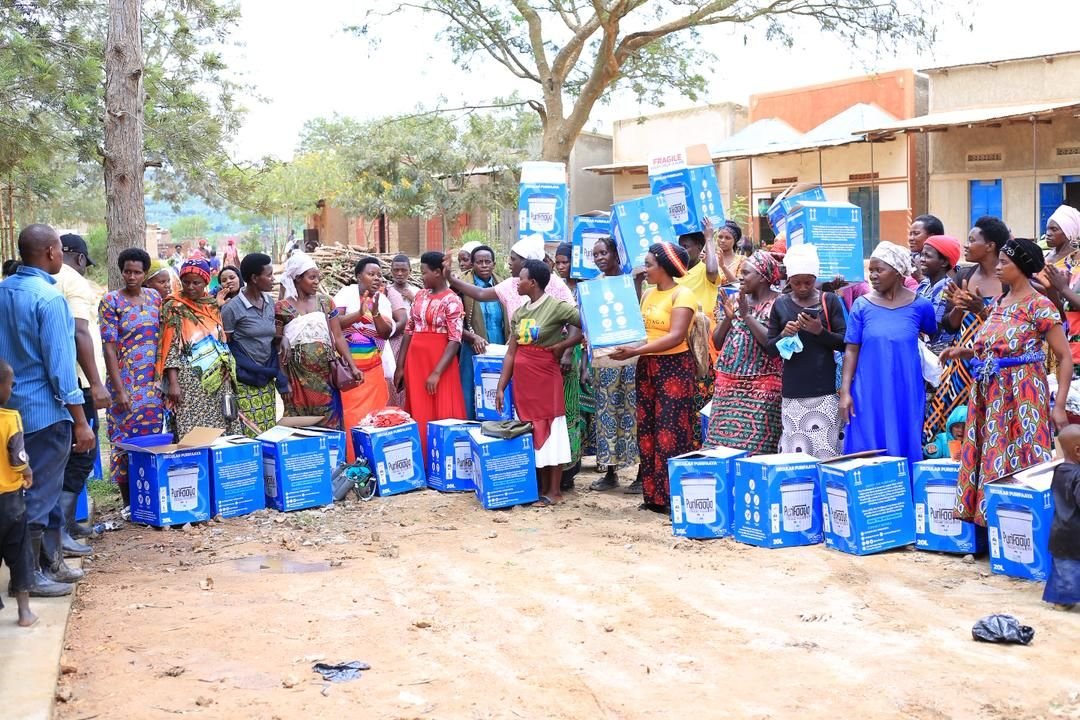
To respond to this challenge, the Association of Refugee Women in Uganda implemented a water purifier project to support vulnerable refugee households, especially women-led families.
The project provided household water purifiers to 50 beneficiary households in Rubondo, reaching 314 people directly and more than 300 others indirectly.
According to the endline survey, 90% of households were still using the water purifiers, and 92% of the filters were fully functional.
This shows that families value the purifiers and continue to use them to make drinking water safer at home.
Improving water treatment practices
The results also showed a strong improvement in household water treatment practices. Eighty-six percent of households reported using the water purifier as their main method for making drinking water safe.
This has reduced the need for boiling water, saving families time, firewood, and money.
Ninety-two percent of respondents said water-related illnesses had reduced since receiving the purifiers.
Better health and improved daily life
Most importantly, the project has contributed to better health outcomes. Many households reported fewer cases of diarrhea, stomach infections, and other water-related illnesses.
Families also reported that children were healthier and visiting clinics less often.
Beyond health, the water purifiers have improved dignity and daily life for women. Women are often responsible for collecting, storing, and managing water in the household.
By providing a safer and easier way to treat water, the project has reduced stress, saved time, and helped women focus more on family care, farming, small businesses, and other productive activities.
What beneficiaries shared
Beneficiaries expressed strong appreciation for the support. Some shared that their children no longer suffer from frequent stomach illnesses, while others said the filters have helped them store and use water more safely than before.
Lessons from the project
However, the project also revealed some challenges. Some households experienced difficulties with maintenance, slow filtration, or breakage of filter parts, especially in larger families.
These findings show the need for continued follow-up, refresher training, replacement support, and larger filters for households with many members.
A practical solution for refugee communities
AORW-U believes that safe water is not only a health issue; it is a foundation for dignity, resilience, and opportunity.
The success of this project demonstrates that simple household-level solutions can make a real difference in refugee communities.
Expanding access to safe water
Moving forward, AORW-U hopes to expand the water purifier initiative to reach more refugee households in Nakivale and beyond.
With continued support, more women and families can access clean drinking water, reduce preventable illnesses, and live healthier, safer, and more dignified lives.