Field Report | Food Security & Community Aid
Addressing Food Insecurity Gaps During the Christmas Solidarity Initiative in Uganda
AORW-U Communications | 24 December 2025 | Kampala, Uganda | 555 Beneficiaries Reached
On 24th December 2025, distribution points across Kampala’s five divisions — Makindye, Rubaga, Kampala Central, Nakawa, and Kawempe — began receiving registered refugee households for the Christmas Solidarity Initiative. It was an initiative to address immediate shortages reported in the weeks leading up to the festive period.
Support from Brigitte and Friends (Switzerland) and Luisa and Family (Germany) made it possible to assemble and distribute both food and non-food items at scale.
“Their compassion and solidarity helped us at addressing acute food insecurity and basic needs among vulnerable refugee women-led households in Kampala during the festive season.”
— AORW-U
By the end of the day, 555 direct beneficiaries from 55 households had received food items. The distribution covered all five divisions of Kampala, with additional set-ups in Nakivale and Rubondo Base Camp in the days immediately following Christmas.
555
Direct Beneficiaries
55
Households Reached
5
Kampala Divisions Covered
94.6%
Beneficiaries from DRC
— Food Access, Demographics and Income Constraints
A Standardised Package, Delivered with Dignity
Beneficiary selection was completed during pre-activity planning meetings. The process relied on an existing database and was cross-checked by community focal persons for transparency. Priority was given to women-led households, survivors of gender-based violence, and families with young children, elderly persons, and individuals with special nutritional needs.
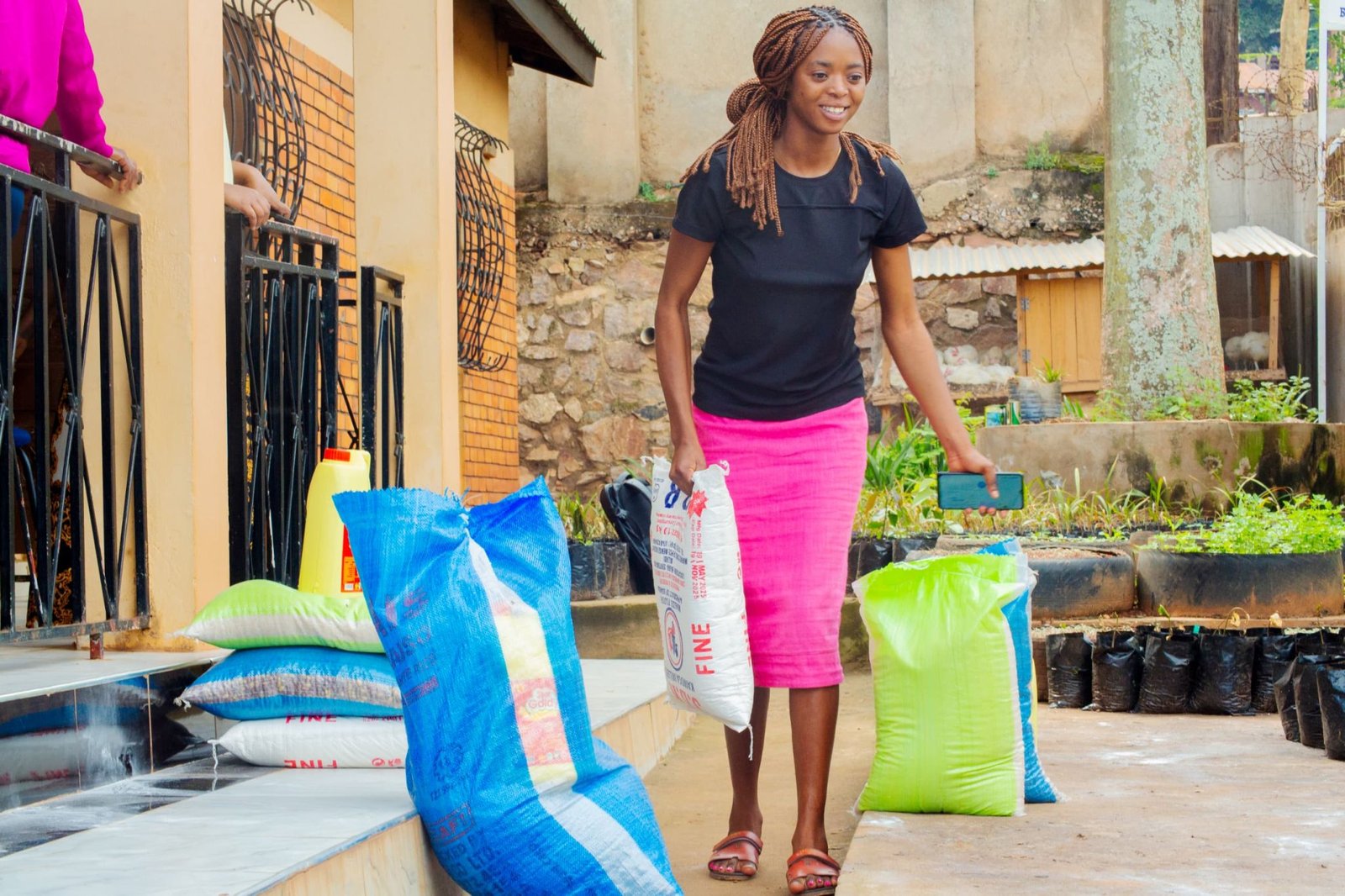
On distribution day, verification was conducted at the point of collection. Registered households were called in, and each received a standardized package. The package had:
- ✓ Rice
- ✓ Beans
- ✓ Maize flour (high-quality, processed by W M Maize Millers Ltd, Wakiso District)
- ✓ Cooking oil and chicken
- ★ New clothes and shoes for children from each household
"66.1% of households could afford only one meal daily."
— Beneficiary Data, Kampala Divisions, December 2025
— Food Access, Demographics and Income Constraints
The Urgency of Needs: What the Data Shows
The distribution data shows a clear concentration pattern. Most beneficiaries (94.6%) were originally from the Democratic Republic of Congo (DRC), with Rubaga and Makindye hosting the largest refugee concentrations. Women and children constituted the majority of the 555 beneficiaries.
Urgency of needs was primarily livelihood support
Required urgent food assistance
Needed direct cash support
It shows that food assistance during Christmas addressed an immediate gap but did not alter the underlying conditions. Households continue to live off unstable income, and a limited capacity to pay for additional expenses. That also compels us to put forward such initiatives more frequently than ever.
— Post-Distribution Visit to Rubondo Sub Base Camp
Voices from Rubondo Zone, Nakivale Refugee Settlement
Following the Kampala distribution, a two-day field visit was conducted in Rubondo Zone, Nakivale Refugee Settlement. On Day 1, a focus group discussion was held with 31 women from the Abatishoboye Group. The session took place in a shaded community space and was lively with participants sharing daily struggles, aspirations, and coping mechanisms.
In addition, 14 women were interviewed in-depth, around topics like food insecurity, limited livelihood opportunities, and gender-based violence. Fresh vegetables were also distributed at the agricultural demonstration site.
On Day 2, a second focus group discussion involved 23 women from the Ubumwe Group, focusing on household responsibilities and income challenges. Several interviewees talked about risks associated with being the breadwinner of the family. Women reported incidents of rape when looking for food, labour or livelihood in their communities. That led to unwanted pregnancies, sexually transmitted diseases, and deep psychological trauma. However, fear of stigma and lack of trust in justice systems discouraged them from reporting formally.
Livelihood Activities and Ongoing Projects
Some ongoing livelihood initiatives were already in place — refugee women are building resilience one harvest at a time.
The Goat Project
Provides both food and income. Others include planting trees for fodder, for sustainable feeding for livestock.
Fodder Trees
Planting trees for sustainable feeding for livestock — reducing environmental degradation while supporting food security.
Vegetable Seedlings
Growing vegetable seedlings to stabilize household food security and reduce reliance on irregular income sources.
Mentorship Programme
Mentorship to empower women with knowledge and confidence to manage projects effectively.
— Operational Challenges During Implementation
Constraints Faced, Lessons Learned
The initiative encountered several constraints during execution, like limited resources compared to the high number of vulnerable households in need along with logistical challenges related to transportation across multiple divisions. There were also time constraints during distribution due to high beneficiary turnout. Distribution time had to be extended, and transport limitations messed up with time schedules across locations.
However, the refugee women were patient throughout the process despite limited resources. The field officer mobilized the crowd with efficiency. Interpreter support was essential for managing the queues and collecting reliable data.
Early planning and community involvement are critical for smooth distribution. Demand for food and non-food assistance among urban refugees remains high.
ExpandVocational Training
Tailored to women’s interests and market demand, enabling sustainable income beyond informal labour.
Establish Microcredit & Savings Groups
Support entrepreneurship and reduce dependence on irregular income through community savings structures.
Build on Agricultural Programs
Scale up demo site activities to reach more households. Agricultural activities at the demo site are promising and should be expanded.
Safe SGBV Reporting Channels
Provide safe reporting channels and psychosocial support services for survivors of SGBV.
Safe Spaces for Women & Girls
Create safe spaces for women and girls to meet, share, and access services.
Continue Distribution to Vulnerable Children
Integrating child-focused support can increase the overall impact of humanitarian assistance.
Solidarity Is a Year-Round Commitment
It shows that food assistance during Christmas addressed an immediate gap but did not alter the underlying conditions. The gaps still remain. We need to conduct regular technical visits to track progress and adapt interventions.
Be Part of the Solution
AORW-U is a refugee-led women’s rights organisation. Your support enables life-changing distributions, livelihood programmes, and safe spaces for refugee women and children.
#ChristmasSolidarity#FoodSecurity#RefugeeWomen#Uganda#AORWU#Nakivale