
In Kampala’s markets, the struggle is hard to miss. By late afternoon, piles of unsold vegetables begin to wilt, fruits get rotten, and perfectly edible food is left to rot. At the same time, across the city, refugee households are cutting off meals, stretching what little they have, or sleeping without meals.
The Kugawana Project works within this gap, not by introducing new food into the system, but by redirecting what is already there, before it is lost.
Kugawana Project Collects Surplus Food through Organized Market Outreach
The system itself is simple, but it flows on consistency. Kugawana’s food supply comes from four major markets – Kalerwe, Nakawa, Nateete, and Kasubi. Collection depends on regular outreach, where volunteers move through crowded market lanes with buckets, speaking directly to vendors.
Market leaders support these efforts. They often use local radio systems and mobile speakers to encourage people to step up. Over time, this has created a routine; vendors know what Kugawana is, and many set aside surplus produce knowing that it will be collected.
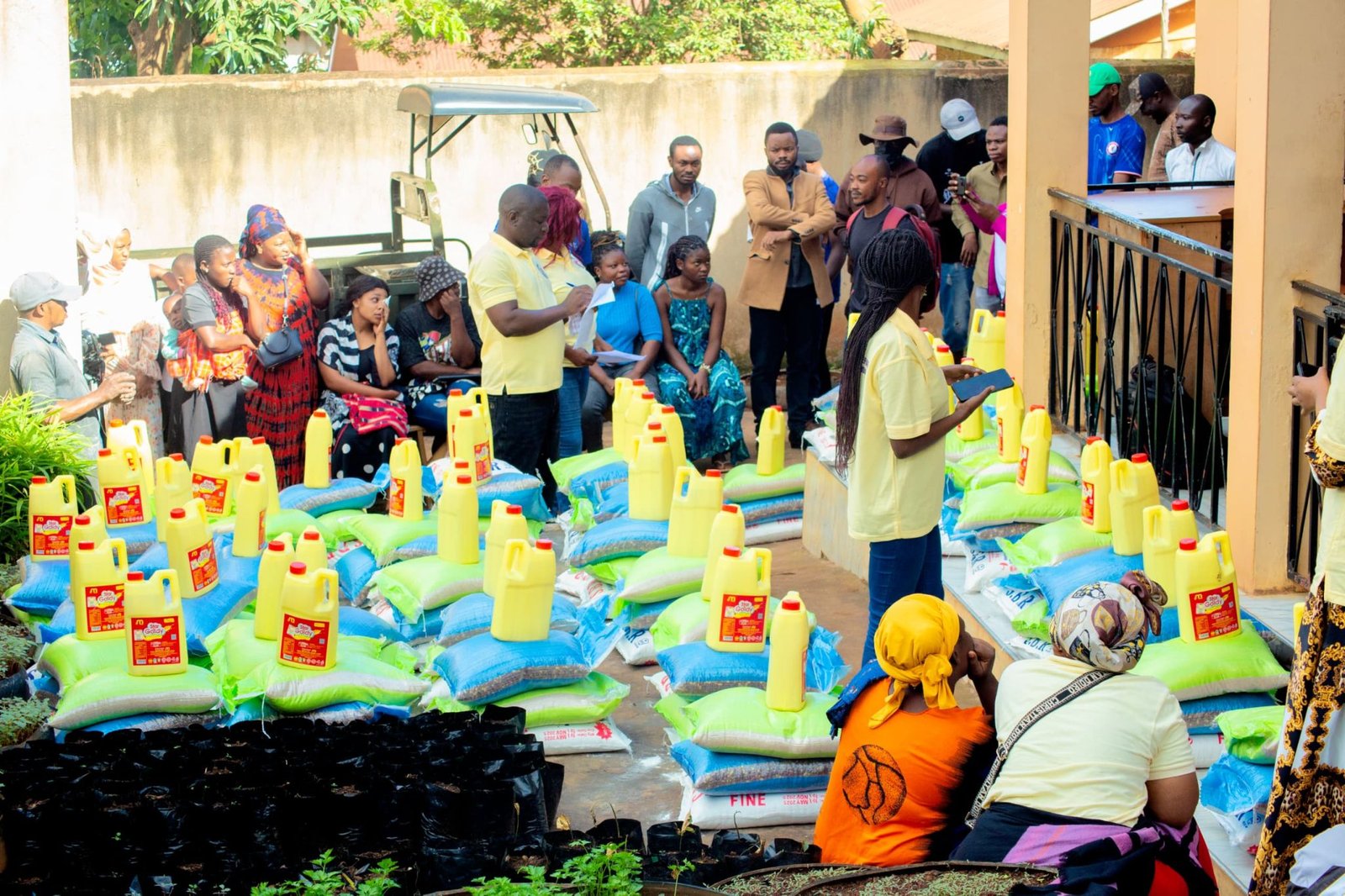
Once gathered, the food is transported to a central point, where it is sorted, checked, and repackaged.
The project maintains a database that categorizes households based on vulnerability – elderly individuals, persons with disabilities, single mothers, families with chronically ill members, and those catering for orphaned children.
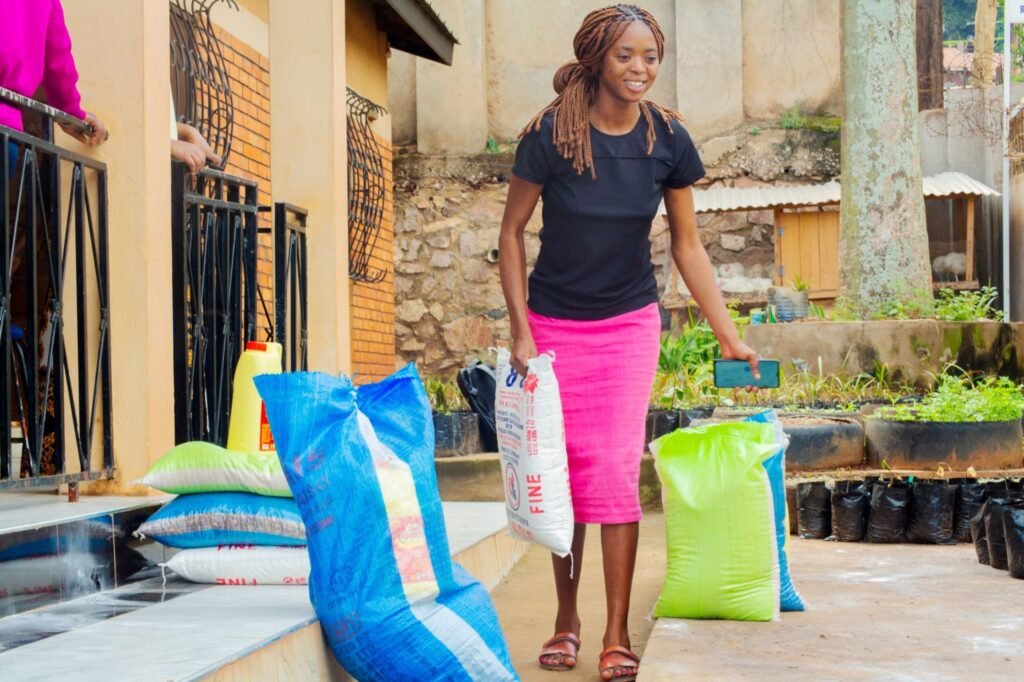
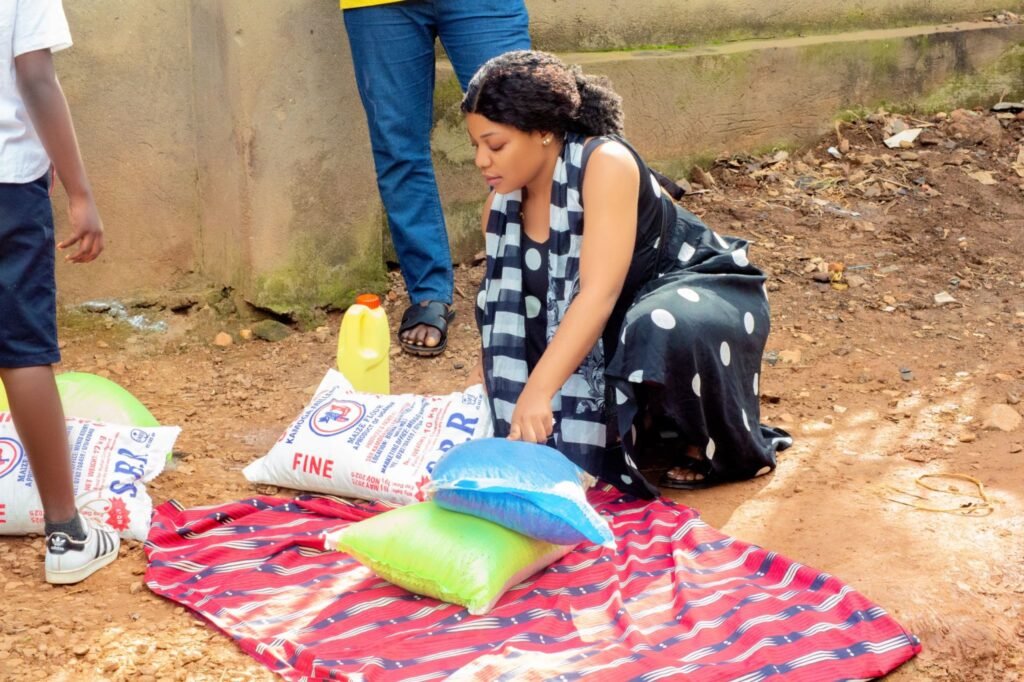
Each household receives a food package once, but the interaction doesn’t end there. Beneficiaries are also connected to other services, either through partner organizations or government programs.
Kugawana Project Scales Food Redistribution
The scale of this system has grown steadily. In the first quarter of 2024, 895 refugees across Kampala’s five divisions accessed improved nutrition through Kugawana. By the second quarter, that number increased to 1402. In the third quarter, 1759 refugees were reached through distributions to 346 households.
The breakdown is specific – 364 women, 419 youth, 695 children, 264 elderly individuals, and 17 persons with disabilities.
These numbers sit against a baseline that explains why the intervention matters. A 2025 assessment of 70 refugee households across Kampala found that 60 percent were surviving on just one meal a day.
Only 8.6 percent managed three meals. Nearly 69 percent experienced recurring periods where food simply ran out.
Even though almost half of these households relied on markets for food, 60 percent did not have the income to buy food. On top of that, 31 percent lacked access to safe drinking water, and about a third needed a balanced diet due to age or chronic illness.
Aziza, a refugee from the Democratic Republic of Congo, supports a family of eight. Before receiving support, most of her income went toward finding basic food, often not enough. With regular supplies of vegetables, grains, and fruits through Kugawana, that pressure got relaxed. That shift allowed her to start spending on school fees and healthcare.
A Similar Pattern Appears in Household Resilience through Reduced Food Pressure
A similar pattern appears in the case of Billan Abdullahi, a single mother of six. As both a volunteer and a beneficiary, she occupies two sides of the system.
With minimal spending on food, she has been able to save 50000 Ugandan shillings each week, enough to cover school fees for two of her children.
Still, the system is not without its limits. Kugawana’s current operations rely on a single stream of donations, and while its database includes around 25000 beneficiaries, both direct and indirect, the number of households reached depends on how much food is collected.
A digital platform, expected to launch in 2025, is intended to address this constraint by directly linking food providers with communities, which can potentially make the process more predictable.
Until then, the work depends on showing up in the same markets, speaking to the same vendors, and moving food through the same channels, day after day. The results are measurable – collections in kilograms and no. of households reached, but the effect is more immediate. Food that would have been discarded is redirected, and for a limited period, that shift creates stability in households where uncertainty is otherwise constant.
Kugawana Project Develops Digital Systems while Relying on Partnerships and Awareness Efforts
The team has been working toward a system that reduces the need for constant physical coordination; something that can match food supply with demand more directly. That effort has been in the form of a mobile application.
The idea is simple – connect food vendors, suppliers, and other donors to communities that need food, without relying entirely on manual collection.
Work on the app began in early 2024, starting with UI/UX design. By mid-year, development was undergoing. Testing was planned for the third quarter, with a full launch expected in January 2025.
At the same time, data protection was ensured through a formal conversation with Uganda’s Personal Data Protection Office, to make sure that any information collected through the app would be handled within national standards.
By the third quarter of 2024, the app itself had been completed.
What hasn’t happened yet is usage. Through 2024, the platform remained in development. This will only change once the app is fully rolled out and tested within the communities.
Until then, the system continues to depend on people showing up, speaking to vendors, and moving food physically across the city.
Partnerships have filled that gap. In Kampala’s markets, relationships were easier to build and sustain. At the same time, attempts were made to bring in supermarkets and hotels, 35 and 30 respectively. But responses from them have been limited so far.
Instead, the project has leaned into what works – regular meetings with market leaders and vendors with collection plans, particularly in Kalerwe, Nakawa, Nateete, and Kasubi. These relationships have been steady, and by late 2025, they were still driving most of food collection.
In terms of awareness, in early 2024, the focus was on physical visibility – posters, flyers, banners, and radio messages in multiple languages. These were not one-time campaigns but mediums used during ongoing outreach.
Later in the year, the approach expanded online. Digital posters began circulating on social media, carrying the same messages beyond the markets.
Between August and October 2025, dozens of e-flyers were shared across platforms like WhatsApp, Facebook, LinkedIn, and Twitter. The reach wasn’t massive, yet it reached hundreds to a few thousand people.
Taken together, this part of the project is still in transition. The digital system is built but not yet active. Partnerships are stable but concentrated within markets.
Kugawana Project Builds Community Trust through Outreach And Transparency
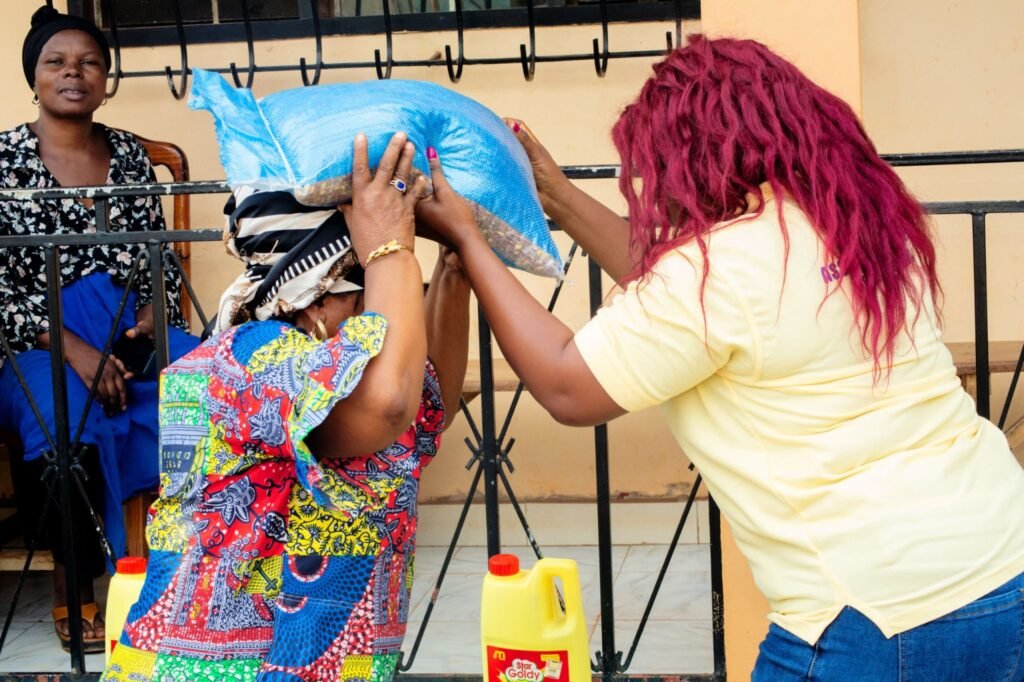
Between August and October 2025, Kugawana directly reached 1973 refugees across Kampala through the redistribution of surplus food collected from four major markets. These individuals were part of 268 households that were identified, tracked, and supported through the project’s system.
The distribution covered a wide mix of people within these households – 268 women, 353 men, 789 youth, 563 children, 323 elderly individuals, and 30 persons with disabilities. The project worked across different layers of vulnerability, which reflects the realities of the communities it serves.
A baseline survey of 70 refugee households helped map out the main challenges – irregular meals, limited income, and the specific needs of households with children, elderly members, or individuals requiring special nutrition. These findings influenced how beneficiaries were categorized and how food was sorted out during distribution.
On the ground, outreach activities have played a key role in maintaining this consistency.
During the reporting period, 21 outreach sessions were conducted across Kampala’s markets. These weren’t one-directional campaigns. Teams used microphones to make public announcements, but much of the engagement happened through direct, one-on-one conversations with vendors.
These exchanges helped with practical insights about why food goes to waste and what would make vendors more willing to contribute.
At the same time, they created space for feedback; vendors and community members could ask questions, raise concerns, or suggest improvements based on their own experience.
Outreach through Social Media Holds Importance As Well
The same conversations continued online in a different form. Through e-flyers shared on platforms like WhatsApp, Facebook, LinkedIn, and Twitter, messages about food waste reduction and food security reached a wider audience. People engaged by viewing, commenting, and sharing content, which created an ongoing conversation on social media.
Transparency has been another consistent part of the process. During this period, 6184 kilograms of surplus food were collected and redistributed. This figure, along with the number of households reached and donors engaged, is not just recorded but shared with communities and partners.
Volunteers from within the community, including individuals like Billan Abdullahi, have also played a dual role – supporting operations while participating in them.
Several lessons have been learned through this period. Communication works best when the marketplace language is taken into consideration. Market leaders remain essential stakeholders, as their presence and influence help build trust.
Keeping accurate records has made it possible to monitor progress in a consistent way. It also ensured that the right support is directed toward the groups that need it most – women, children, elderly individuals, and persons with disabilities.
Challenges are still there. The gap between food collected and the level of need remains significant, and communication can be difficult in such a multilingual environment.
Even so, changes at the household level are visible. Families who previously struggled to have even one meal a day are now experiencing comparative stability. For some, this has meant not only food but also the ability to use their limited income for rent, school fees, and basic utilities.